
Top Engineering Schools in US: 2026 Rankings & Salaries
Compare top engineering schools in US like MIT, Stanford, and Berkeley. Review acceptance rates, starting salaries, and verified admissions dates.
Introduction
Gaining admission to the top engineering schools in US represents one of the most competitive milestones in higher education. These elite institutions do not just teach technical coursework; they drive global innovation in artificial intelligence, aerospace, robotics, and clean energy.
I evaluated the latest data from national ranking bodies and university admissions offices to examine what truly separates these institutions from standard four-year programs. What stands out immediately is the sheer scale of research funding, corporate recruitment pipelines, and access to world-class laboratories available to undergraduates.
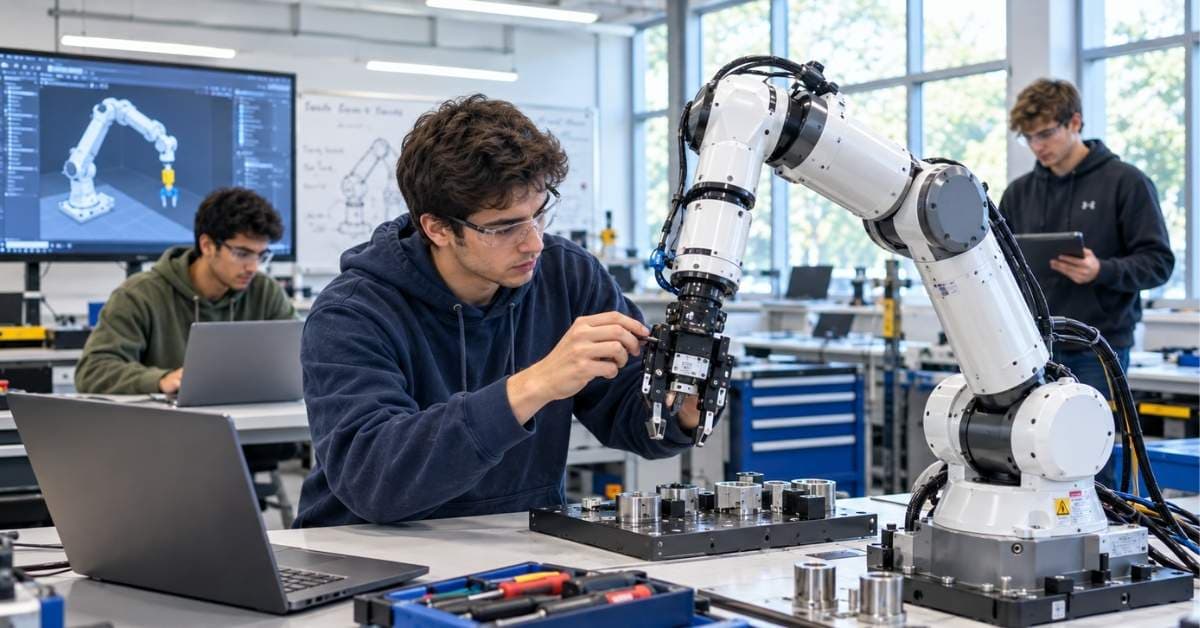
Whether you are a high school student mapping your STEM prerequisites or a parent calculating college timelines, having accurate numbers is critical. This comprehensive review breaks down the top engineering schools in US based on research funding, acceptance selectivity, starting salaries, and admissions deadlines.
National Rankings and Institutional Benchmarks
When analyzing the top engineering schools in US, a select group of world-renowned universities consistently dominates the conversation. Institutions like MIT, Stanford, UC Berkeley, Caltech, and Georgia Tech set the global standard for technical rigor and patent output.
Choosing among these campuses depends heavily on your desired engineering subfield and geographic goals. For instance, Stanford offers unrivaled venture capital proximity in Silicon Valley, while MIT commands the nation's most active biotechnology and robotics corridors.
Below is a verified comparison of the top engineering schools in US, highlighting acceptance rates and career outcomes.
| University | U.S. News Rank | Approx. Acceptance Rate | Top Specializations | Median Starting Salary |
|---|---|---|---|---|
| MIT | #1 | ~4%–5% | Aerospace, Electrical, AI | $145,000+ |
| Stanford University | #2 | ~3%–4% | Computer Science, Bioengineering | $137,000+ |
| UC Berkeley | #3 | ~9%–11% | Civil, Electrical, Environmental | $110,000+ |
| Georgia Tech | #4 | ~13%–16% | Industrial, Mechanical, Biomedical | $92,000+ |
| Caltech | #5 | ~3% | Applied Physics, Chemical, Aerospace | $125,000+ |
Curriculum Rigor and Core Disciplines
The academic rigor at the top engineering schools in US is designed to push students beyond theoretical textbook problems into practical discovery. Undergraduates spend their foundational years mastering multivariable calculus, differential equations, and calculus-based physics before declaring specialized tracks.
By their junior year, students transition into departmental capstone projects where they solve engineering challenges sponsored by private corporations. These capstone experiences ensure that graduates understand how to build functional prototypes, manage budgets, and document technical specifications.
Whether a student focuses on quantum computing at Caltech or clean-water distribution systems at Berkeley, the training is rigorous and comprehensive. For families curious about how American undergraduate engineering degrees compare with international standards, our education systems guide provides a detailed breakdown of global credential pathways.
Cutting-Edge Laboratories and Research Facilities
One major differentiator separating the top engineering schools in US from regional colleges is undergraduate access to billion-dollar research facilities. Students do not wait until graduate school to participate in groundbreaking research; they enter active laboratories during their freshman year.
Campuses feature microfabrication cleanrooms, hypersonic wind tunnels, supercomputing clusters, and bio-nanotechnology facilities. Caltech's direct affiliation with NASA's Jet Propulsion Laboratory (JPL) gives undergraduates front-row access to robotic planetary exploration missions.

These facilities give students hands-on technical competencies that corporate employers actively seek out during on-campus recruitment. Managing high-level lab equipment transforms classroom learners into qualified engineering researchers long before graduation.
Career Outcomes, Salaries, and Industry Recruitment
Students attending the top engineering schools in US benefit from unmatched corporate recruitment pipelines. Technology giants, defense contractors, and top-tier financial firms recruit directly from these campuses every autumn.
Career fairs at institutions like Georgia Tech and MIT host hundreds of leading employers offering high-paying summer internships and full-time engineering contracts. Graduates from computer engineering and aerospace programs regularly command starting salary packages exceeding $130,000 right out of undergraduate studies.
Beyond immediate compensation, the alumni network of these institutions provides lifelong career leverage. Engineering alumni frequently launch venture-backed startups together, hire fellow graduates, and collaborate on international research initiatives across major technical sectors.
Admissions Timelines and Critical Deadlines
Securing a seat at one of these prestigious institutions requires meeting strict admissions deadlines during your high school senior year. Most programs utilize Early Action (EA) or Early Decision (ED) plans alongside traditional Regular Decision (RD) rounds.
Below are the verified application deadlines for the top engineering schools in US for the upcoming admissions cycle.
| University | Early Deadline | Regular Decision Deadline | Financial Aid Priority (FAFSA/CSS) |
|---|---|---|---|
| MIT | November 1 (Early Action) | January 4 | Mid-February |
| Stanford | November 1 (Restrictive EA) | January 5 | Mid-February |
| UC Berkeley | November 30 (Single Deadline) | November 30 | Early March |
| Georgia Tech | October 15 (In-State) / Nov 1 (Out-of-State) | January 5 | Early February |
| Caltech | November 1 (Restrictive EA) | January 3 | Early January |
Note: University admissions deadlines may shift each academic year slightly. Always verify exact dates directly with each institution's undergraduate admissions portal before submitting materials.
Early Academic Planning and K-12 Milestones
Earning a seat at the top engineering schools in US requires strategic preparation that starts early in high school. Admissions committees look for students who have exhausted their school's highest-level mathematics and science offerings, including AP Calculus BC, AP Physics C, and advanced chemistry.
To build a competitive resume for the top engineering schools in US, students must plan their math and science sequences years. Skipping foundational coursework can leave an applicant underprepared for rigorous college entrance expectations.

If you are a parent mapping out your child's academic journey, verify their grade timeline using our free School Age Calculator on LearnerStep. Our tool calculates your child's exact graduation cohort and age milestones, helping you plan out honors and AP sequences well before high school begins. You can also explore our blog for actionable guides on college readiness and graduation planning.
Evaluating Tuition, Financial Aid, and True ROI
Evaluating the return on investment for the top engineering schools in US reveals why families pursue these programs despite steep sticker prices. While private tuition can exceed $60,000 annually, schools like MIT and Stanford offer robust, need-blind financial aid policies that fully cover tuition for families below specific income thresholds.
Because engineering starting salaries are among the highest across all undergraduate degrees, the payback period for student loans is significantly shorter than in humanities disciplines. Graduates typically earn back their educational investment within a few years of entering the workforce.
When factoring in lifetime earnings, patent licensing opportunities, and leadership trajectories, graduating from a premier engineering program remains one of the most reliable wealth-building decisions in American education.
Conclusion
Choosing to target the top engineering schools in US is an ambitious, life-changing decision for any STEM student. These institutions provide the faculty, resources, and institutional reputation necessary to launch transformative careers in high-tech industries.
With verified data on the top engineering schools in US, you can approach the college admissions process with clear expectations and strategic focus. Success requires consistent dedication to advanced coursework, meaningful research experience, and careful planning around application deadlines.
Before finalizing your four-year high school course sequence, verify your student's graduation cohort with our free School Age Calculator. Starting with a clear long-term roadmap ensures your student reaches their full academic and technical potential.
Frequently Asked Questions
Q1: Which universities are consistently ranked as the top engineering schools in US?
Institutions like MIT, Stanford University, UC Berkeley, Georgia Tech, and Caltech consistently rank at the top of national and global engineering tables. These universities are celebrated for their massive research expenditures, world-class faculty, and outstanding graduate employment rates.
Q2: What GPA and test scores do the top engineering schools in US require?
Admitted students generally possess unweighted GPAs of 3.9 to 4.0 and score in the 98th percentile or higher on standardized exams (SAT Math scores of 780–800 or ACT Math scores of 35–36). However, admissions committees evaluate candidates holistically, emphasizing independent technical projects, coding competitions, and research experience.
Q3: What is the average starting salary for graduates from these institutions?
Graduates from premier engineering programs frequently secure starting salaries ranging from $95,000 to over $145,000, depending on their specific discipline. Fields like computer science, software engineering, and electrical engineering command the highest immediate compensation packages.
Q4: Can undergraduate students participate in high-level university research?
Yes. Unlike many regional institutions where lab resources are reserved strictly for graduate researchers, leading engineering schools actively sponsor undergraduate research opportunities (such as MIT's UROP program) starting as early as freshman year.
Q5: How early should high school students start preparing for engineering admissions?
Preparation should begin by 8th or 9th grade to ensure proper placement into accelerated math pathways. Students must reach AP Calculus and calculus-based physics by their senior year. Families can verify their student's exact academic milestones using the free School Age Calculator on LearnerStep.