
Phoenix High School: Is This Flexible Path Right for You?
Considering Phoenix High School? I break down how alternative programs work, what the diploma means, who qualifies, and how to enroll.
Introduction
Not every student thrives in a two-thousand-seat building with rigid bell schedules and crowded hallways. Some learners need smaller classrooms, flexible hours, and teachers who actually have enough bandwidth to sit down and build a personalized academic plan. That is exactly the gap that Phoenix High School programs are designed to fill.
I have spent considerable time researching how these alternative high school models work across multiple districts — from California to Georgia to Virginia. What I found is a system that genuinely changes outcomes for students who were falling through the cracks of the traditional model, not because they lacked ability, but because the traditional structure was never built for the way they learn best.

If your student is behind on credits, juggling work or family responsibilities, or simply needs a pace that respects their individual learning style, Phoenix High School may be the most important decision you make this year. Here is the honest, practical breakdown of how these programs actually work.
What Exactly Is a Phoenix High School?
The name "Phoenix" is used by alternative education programs in school districts across the country. Each one operates independently under its local district — from the East Side Union High School District in California to Gwinnett County Public Schools in Georgia and Culpeper County in Virginia.
Despite the geographic differences, the core mission is remarkably consistent. Every Phoenix High School is designed to give students a second chance at earning a fully accredited, standard high school diploma through flexible scheduling, small class sizes, and personalized academic pathways.
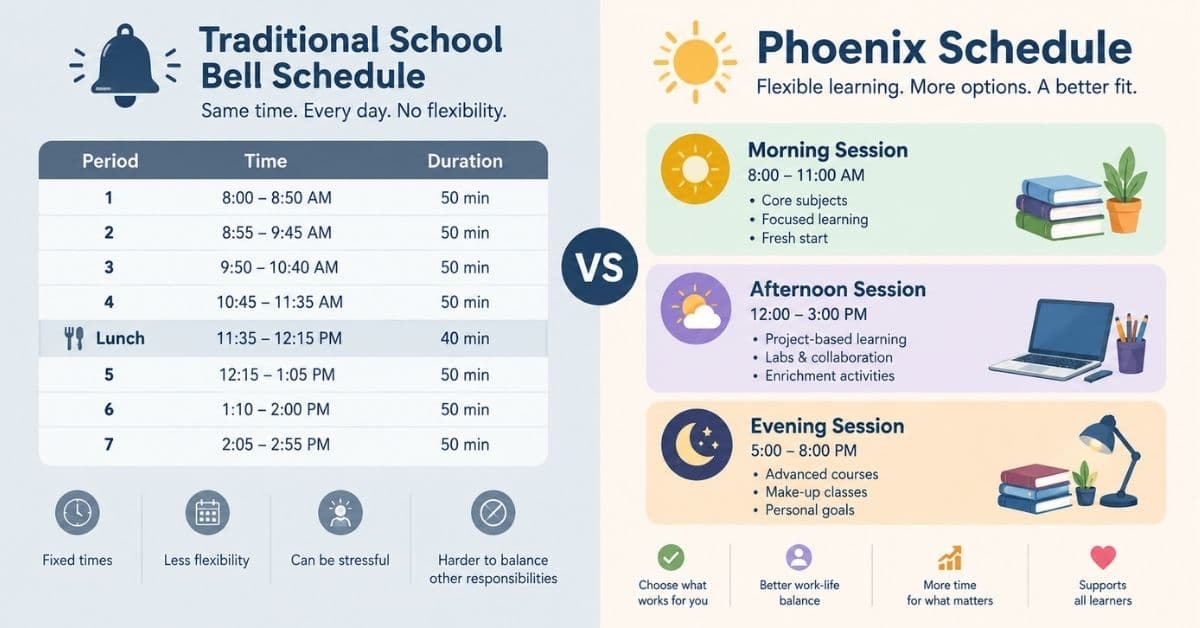
These are not GED prep centers or dropout warehouses. Students at Phoenix High School earn the exact same diploma as their peers in the traditional campus down the street. The difference is how they get there — with more support, more flexibility, and far less of the social pressure that derails so many teenagers.
Who Actually Qualifies to Attend?
Phoenix High School programs typically serve students who meet one or more of the following criteria. Understanding these qualifications early helps families avoid wasted time during the enrollment process.
Most districts require a formal referral or a consultation meeting with a counselor from the student's current "home" school before transfer paperwork begins. This ensures that the alternative environment is genuinely the right fit rather than an avoidance of accountability.
Common qualifying circumstances include:
- Students who are behind on graduation credits and need an accelerated recovery pathway
- Learners balancing part-time or full-time employment alongside their studies
- Students with family caregiving responsibilities that conflict with standard 8 AM–3 PM schedules
- Young parents who need flexible hours and access to on-site or nearby childcare resources
- Students returning to school after an extended absence who need a supportive re-entry environment
Before initiating the referral process, I recommend confirming your child's exact grade standing using our free School Age Calculator on LearnerStep. It maps your student's birthdate to their correct grade placement under your specific state's guidelines, which is essential information for the counselor meeting.
How the Flexible Schedule Actually Works
The single biggest draw of Phoenix High School is the scheduling. Traditional high schools lock students into a fixed six- or seven-period day running from early morning to mid-afternoon. That model works for many teenagers — but it fails completely for students who work evening shifts, care for younger siblings during the day, or simply cannot focus for seven consecutive hours in a fluorescent-lit building.
Most Phoenix programs offer multiple session windows — morning, afternoon, and evening blocks. Students typically focus on two or three subjects per session rather than juggling six or seven simultaneously. This concentrated approach leads to deeper mastery and higher course completion rates.
| Feature | Phoenix High School | Traditional High School |
|---|---|---|
| Class Size | 10–15 students | 25–35 students |
| Daily Schedule | Flexible sessions (AM/PM/Evening) | Fixed 8 AM – 3 PM |
| Learning Pace | Individualized mastery-based | Uniform group progression |
| Course Load | 2–3 focused subjects per session | 6–7 simultaneous courses |
| Environment | Supportive, low-pressure | High-volume, socially intense |
Credit Recovery: The Core Academic Engine
For the majority of students, the primary reason they transfer to Phoenix High School is credit recovery. A failed algebra class in tenth grade does not have to derail an entire graduation timeline — but in a traditional school, the options for making up that credit are extremely limited and often involve repeating a full semester alongside younger students.
The credit recovery model at Phoenix High School is built differently. Students work through the essential standards of the failed course in a targeted, accelerated format. They are not re-learning an entire semester of material they already understood; they are focusing specifically on the concepts and assessments they did not originally master.

This targeted approach means a student can recover a full credit in significantly less time than a traditional semester retake. For students who are two or three credits behind, Phoenix High School can realistically close that gap within a single academic year — bringing graduation back onto the original timeline.
Key Enrollment and Academic Milestones
| Milestone | Typical Timeline | What to Do |
|---|---|---|
| Counselor Referral Meeting | Anytime during the year | Contact your current school's guidance office |
| Fall Enrollment Window | July – August | Submit transfer paperwork and transcripts |
| Spring Enrollment Window | December – January | Mid-year entry for credit recovery students |
| Credit Recovery Sessions | Rolling / Continuous | Available year-round at most campuses |
| FAFSA Opens (Seniors) | October 1 | Begin federal financial aid application |
| Mid-Year Progress Review | January – February | Counselor checks credit recovery pace |
| College Application Deadlines | November – March | Varies by institution |
| Senior Portfolio / Exit Review | April – May | Final credit audit before graduation |
| Graduation Ceremony | May – June | District sets specific date annually |
| Summer Credit Recovery | June – July | Catch up on remaining credits if needed |
The Diploma: Is It Actually the Same?
This is the question every parent asks first, and the answer is unequivocally yes. The diploma earned at Phoenix High School is a standard, fully accredited high school diploma issued by your local school district. It meets every state graduation requirement and is accepted by colleges, the military, and employers nationwide.
Most public Phoenix programs are accredited through their state Department of Education or through regional accrediting bodies like Cognia (formerly AdvancED) or WASC. You can verify a specific campus's accreditation status by checking the "About Us" or "Academics" section on their official district website.
If your student is considering college after graduation, the Phoenix High School diploma carries the same weight as any other district diploma on a university application. For families exploring post-secondary timelines, our blog has detailed guides on everything from how long is summer school to professional degree pathways.
Counseling, Mentorship, and Student Well-Being
Academic recovery is only half the equation. Many students arrive at Phoenix High School carrying the emotional weight of academic failure, social isolation, or difficult personal circumstances. The counseling infrastructure at these campuses is specifically designed to address the whole student — not just their transcript.

Class sizes of 10 to 15 students mean that teachers function as mentors rather than lecturers. They know each student's name, their backstory, and the specific barriers standing between them and graduation. This level of personal investment is nearly impossible in a traditional classroom of thirty-five students.
Most Phoenix High School campuses also provide direct access to social workers, mental health counselors, and community resource coordinators. For students dealing with housing instability, food insecurity, or family conflict, these wraparound services are often the difference between dropping out permanently and walking across the graduation stage.
Career Readiness and What Comes After
The mission of Phoenix High School does not end at diploma distribution. Many campuses maintain active partnerships with local community colleges, vocational training centers, and employers who specifically recruit from alternative programs.
Students can participate in resume-building workshops, mock interview sessions, and career exploration seminars that connect classroom learning to real-world employment. Some districts even offer dual-enrollment options, allowing Phoenix students to begin earning college credits before they officially graduate from high school.

For families mapping out the full educational journey from kindergarten through career entry, our education systems guide provides a comprehensive look at how grade structures and post-secondary pathways work across different states and countries.
How to Determine If Phoenix High School Is the Right Fit
Not every struggling student needs an alternative program. Some simply need a better tutor, a different teacher, or a resolved personal issue. The decision to transfer to Phoenix High School should be made collaboratively between the student, their family, and a qualified school counselor.
Ask these questions before committing:
- Has your student failed two or more core courses and fallen behind their graduation cohort?
- Does your student have work or family obligations that make a fixed daily schedule genuinely unworkable?
- Has your student expressed that the social environment of their current school is actively preventing them from focusing on academics?
- Is your student motivated to graduate but needs a different structure to get there?
If you answered yes to two or more of these, Phoenix High School is worth a serious conversation with your district counselor.
Conclusion
Phoenix High School exists because the traditional model does not work for every student — and that is not a failure on the student's part. It is a recognition that learning happens differently for different people, and that a flexible, supportive, smaller environment can unlock potential that a massive campus never could.
The diploma is real, the accreditation is legitimate, and the support services are often more comprehensive than what traditional schools provide. If your family is considering this path, start by confirming your student's current grade placement with our School Age Calculator and then schedule a meeting with your district counselor to discuss the referral process. More educational planning resources are available across the LearnerStep blog.
Frequently Asked Questions
Q1: What is Phoenix High School?
Phoenix High School is an alternative public education program offered by school districts across the country for students who need a non-traditional path to graduation. It features small class sizes, flexible scheduling with morning, afternoon, and evening sessions, and personalized credit recovery plans — all leading to a fully accredited standard high school diploma.
Q2: Is the Phoenix High School diploma the same as a regular diploma?
Yes. The diploma issued by Phoenix High School is a standard, district-accredited high school diploma that meets all state graduation requirements. It is accepted by colleges, universities, the military, and employers nationwide — it is not a GED or equivalency certificate.
Q3: Who can attend Phoenix High School?
Most districts require students to receive a formal referral from a counselor at their current school. Typical candidates include students who are behind on credits, need flexible hours due to work or family responsibilities, or require a smaller and more supportive learning environment to stay on track toward graduation.
Q4: How does credit recovery work at Phoenix High School?
Instead of repeating an entire semester-long course, students focus specifically on the standards and assessments they did not originally master. This targeted approach allows learners to recover a full course credit in significantly less time than a traditional retake, helping them catch up to their graduation cohort faster.
Q5: How do I know if my child is in the right grade for enrollment?
Before initiating the transfer process, use our free School Age Calculator on LearnerStep. Enter your child's birthdate and select your state — it instantly confirms their correct grade placement under your local guidelines, which is essential information for the counselor referral meeting.