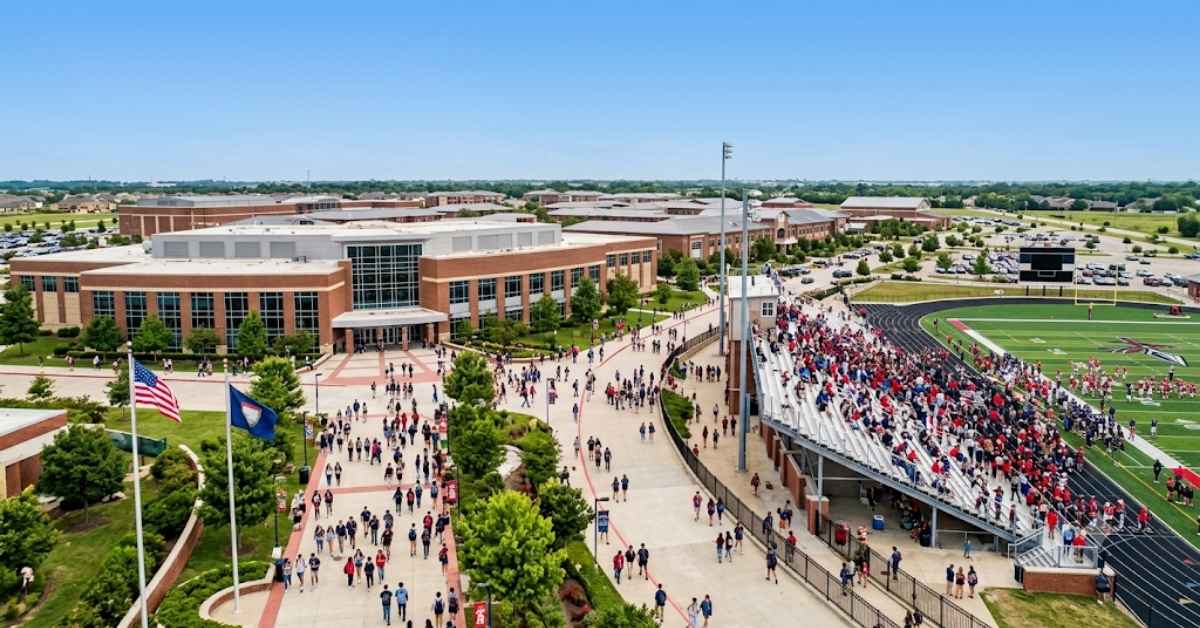
Largest High School in America: Physical vs Virtual Giants
I examined the largest high school in America, comparing Brooklyn Tech's physical campus with massive virtual charter academies.
Introduction
When exploring educational scale across the United States, I set out to discover which institution truly holds the title of the largest high school in America. Most people picture a sprawling suburban Texas campus with an enormous football stadium and crowded hallways. While physical size is certainly impressive, the actual answer is far more nuanced than simple building square footage.
The real answer to identifying the largest high school in America depends entirely on whether you evaluate traditional brick-and-mortar facilities or modern virtual institutions. Over the last two decades, online charter networks have grown into educational powerhouses that enroll tens of thousands of pupils across entire states. In this guide, I break down the verified numbers behind both physical and virtual campuses to help families understand what learning at this immense scale genuinely looks like.
Defining the Largest High School in America: Campus vs Virtual
When evaluating the largest high school in America, researchers encounter two distinct categories of educational scale. If your definition requires a single physical campus where students walk through the doors every morning, New York City takes the top honor. Conversely, if you measure total enrollment regardless of instructional delivery, virtual charter networks outnumber physical campuses by wide margins.
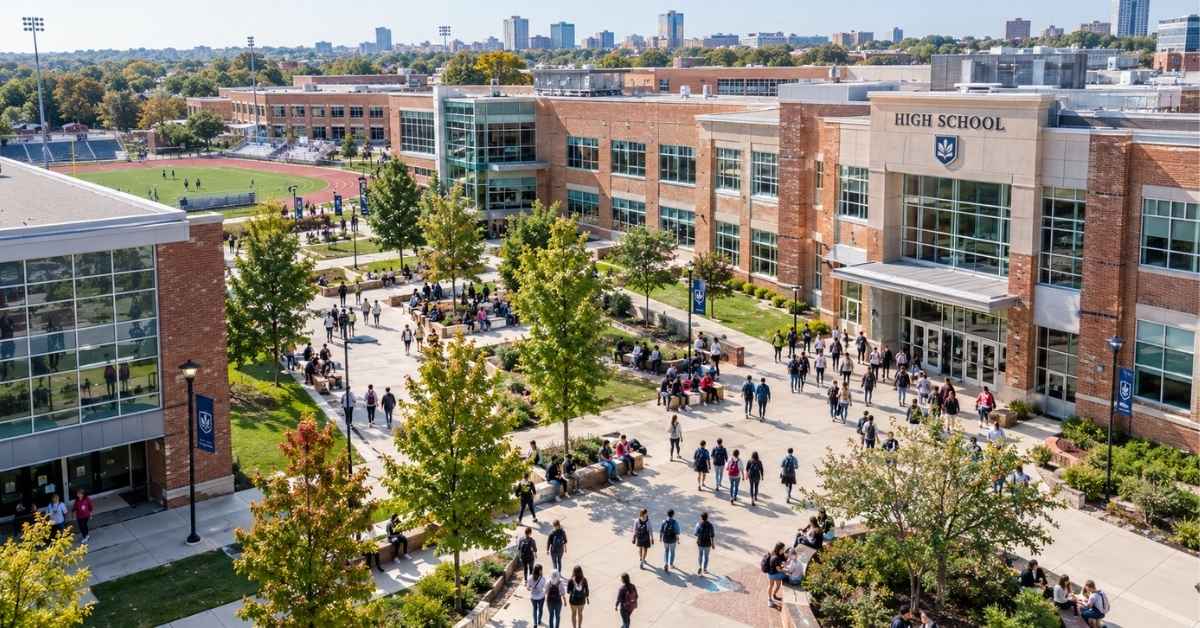
This distinction matters tremendously for parents and students weighing their academic options. Attending an expansive metropolitan building with six thousand classmates demands personal organization, resilience, and navigational independence. In contrast, attending a statewide online network with twenty-five thousand enrolled peers offers asynchronous flexibility alongside unique self-discipline challenges.
Understanding these operational frameworks helps families match their student's personality with the right learning environment. Massive physical institutions often provide specialized career labs and athletic opportunities that smaller facilities cannot fund. Meanwhile, large virtual systems deliver flexible pacing and comprehensive dual-enrollment coursework from home.
Brooklyn Technical High School: The Largest Physical Campus
Situated in Fort Greene, Brooklyn Technical High School stands as the undisputed largest high school in America among traditional in-person institutions. Housed in a twelve-story monolithic facility, Brooklyn Tech serves approximately 6,000 students under a single roof. What makes this enrollment even more impressive is that the campus is simultaneously one of the country's most selective public prep academies.
Admissions to this largest high school in America are determined solely through the competitive Specialized High Schools Admissions Test. Each year, roughly thirty thousand New York City eighth graders sit for the exam, with only the top five percent securing a freshman seat. Once enrolled, students choose from nineteen specialized academic majors, including aerospace engineering, mechatronics, bioscience, and computer science.
The campus functions almost like a self-contained mid-sized university. It features an auditorium seating over three thousand people, advanced materials laboratories, television production studios, and rooftop weather monitoring systems. With more than 150 student clubs and forty varsity athletic programs, Brooklyn Tech demonstrates how large-scale enrollment can fund world-class extracurricular variety.
Epic Charter Schools: Virtual Mega-Enrollment
If you define the largest high school in America by total student headcount regardless of physical attendance, Oklahoma's Epic Charter Schools takes the national title. Operating as a public virtual charter system, Epic serves over 27,000 students statewide across grades Pre-K through 12. Its high school division alone enrolls significantly more teenagers than any traditional district building in the country.

Epic provides tuition-free, self-paced instruction tailored to students who require schedule flexibility beyond the standard six-period school day. Through its Collegiate Academy, eligible high schoolers earn dual college credits, graduating with both a diploma and an associate degree. The institution also offers extensive Advanced Placement courses covering psychology, biology, art history, and calculus.
Operating at this scale requires sophisticated administrative oversight and digital tracking. While virtual mega-districts have faced legislative scrutiny regarding attendance validation and state funding allocations, their appeal remains strong for families needing remote education. Virtual scale provides access to specialized instructors that rural districts frequently lack.
Major Institutional Contenders Compared
With over 23,000 pupils, Commonwealth Charter Academy represents another contender reshaping what we consider the largest high school in America. Based in Pennsylvania, this public cyber charter demonstrates how digital networks manage expansive cohorts through localized community learning centers. The table below compares the nation's leading physical and virtual secondary institutions:
| School Name | Location | Operational Format | Estimated Enrollment | Selective Admission |
|---|---|---|---|---|
| Brooklyn Technical High School | Brooklyn, NY | In-Person / Physical | ~6,000 Students | Yes (SHSAT Exam) |
| Epic Charter Schools | Oklahoma City, OK | Virtual / Remote | 27,000+ (K–12) | No (Open Public) |
| Commonwealth Charter Academy | Harrisburg, PA | Virtual / Hybrid | 23,000+ (K–12) | No (Open Public) |
| Allen High School | Allen, TX | In-Person / Physical | ~5,300 Students | No (Public Feeder) |
| Duncanville High School | Duncanville, TX | In-Person / Physical | ~4,500 Students | No (Public Feeder) |
As shown above, traditional campuses concentrate thousands of adolescents inside single municipal facilities. Meanwhile, virtual networks distribute student bodies across thousands of square miles while centralizing academic governance.
Why Texas Dominates the Largest High School in America Rankings
When examining physical footprint rather than just student headcounts, Texas high schools dominate national lists. From Allen to Duncanville, Texas suburban districts regularly build facilities designed to rival the largest high school in America in sheer square footage. Rapid suburban population growth combined with district consolidation policies drives this preference for massive comprehensive facilities.

In Texas, community culture frequently centers around high school athletics and marching bands, creating public demand for centralized mega-campuses. Allen High School, for instance, serves over 5,000 students in grades 10 through 12 and features an eighteen-thousand-seat stadium. Consolidating teenagers into single campuses allows districts to construct commercial-grade culinary kitchens, hospital simulation labs, and collegiate athletic centers.
Academic Advantages and Trade-Offs of Massive Scale
Academic opportunities at the largest high school in America often surpass smaller schools through expanded Advanced Placement courses and specialized technical majors. When an institution enrolls thousands of teenagers, it can justify hiring specialized faculty for niche subjects like multivariable calculus, forensic pathology, and Japanese language. In small rural or boutique schools, low enrollment makes such offerings economically impractical.
Enrolling in the largest high school in America gives students access to specialized laboratories and diverse peer groups that mirror college campuses. However, massive size also requires strong personal accountability. Students who struggle with self-advocacy or feel overwhelmed by crowded environments may find large institutions difficult to navigate without proactive counselor support.
Understanding whether your teenager is prepared for the scale of the largest high school in America requires tracking developmental readiness and grade eligibility early. To verify your student's upcoming grade placement and state enrollment cutoffs, use the free LearnerStep School Age Calculator. You can also explore our LearnerStep blog and our Education Systems Guide for insights into secondary schooling standards.
Summary of Secondary Education Scale
Ultimately, defining the largest high school in America requires looking at both physical engineering and modern virtual learning systems. Brooklyn Tech remains the benchmark for physical secondary education, proving that massive urban campuses can achieve world-class selective academic excellence. Concurrently, virtual giants like Epic Charter Schools illustrate how remote learning has permanently altered enrollment metrics.
Whether you favor the collegiate energy of an urban mega-campus or the flexible pacing of a virtual academy, evaluating institutional size helps you make informed choices. Visit learnerstep.com to plan your child's educational pathway and ensure they enter high school prepared for success.
Frequently Asked Questions
What is the largest high school in America by in-person attendance?
Brooklyn Technical High School in New York is the largest high school in America by physical in-person enrollment, serving approximately 6,000 students on campus. It operates as an elite public specialized high school that admits students exclusively based on competitive entrance exam scores.
Which online high school has the highest student enrollment?
Epic Charter Schools in Oklahoma holds the highest enrollment for a virtual charter school, serving over 27,000 pupils across its statewide elementary, middle, and high school divisions. The tuition-free public program combines remote instruction with dual college credit pathways.
Why do so many Texas high schools have huge student bodies?
Texas school districts frequently rely on centralized campus models that combine local tax revenues into massive comprehensive facilities. Rapid suburban population growth and high community investment in athletics, band, and career technologies further encourage constructing mega-campuses.
Are students at large high schools more likely to succeed?
Large schools offer significant advantages, including wider Advanced Placement selections, state-of-the-art career labs, and diverse extracurricular options. However, academic success depends on a student's personal learning style, self-advocacy skills, and willingness to participate in campus communities.