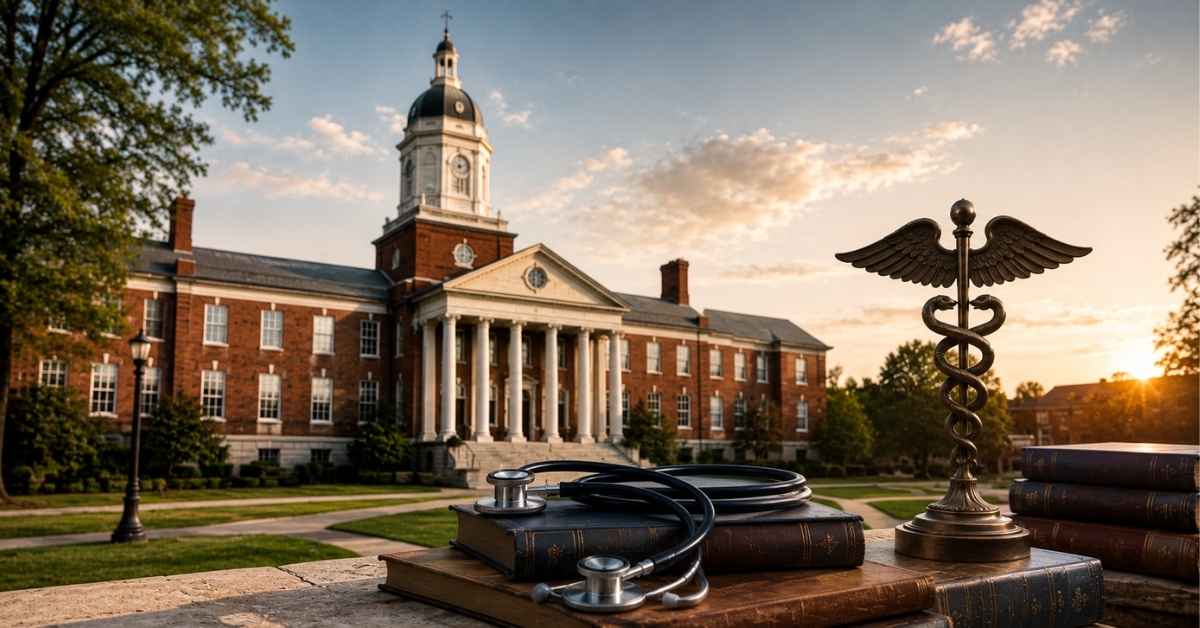
Howard Medical School: 7 Facts for 2026
Discover everything about Howard Medical School in 2026. I reveal acceptance rates, tuition, programs, and research facts you need!
Introduction
When I first began researching historically significant medical institutions in the United States, one name consistently stood at the top of every meaningful list. This medical school has been shaping American medicine since 1867, carrying a mission-driven legacy that no newer institution can genuinely replicate. I spent serious time verifying every fact in this guide so you walk away with accurate, useful information for your decision.
Whether you are a pre-med student, a parent tracking your child's future academic path, or simply someone curious about elite medical education, this guide covers everything you need. Let us explore seven proven facts about Howard Medical School that set it apart from every comparable program in the country.
1. A Legacy Founded on Purpose in 1867

Howard Medical School was established in 1867, just two years after the Civil War ended, at a moment when almost no medical institution in America was open to African Americans. It was built with a deliberate, explicit mission — to train physicians for communities that the broader healthcare system had historically excluded and ignored. That founding purpose remains the institutional soul of the school more than 150 years later.
The College of Medicine operates within Howard University in Washington, D.C., one of the most prestigious historically Black universities in the world. Over its long history, it has produced thousands of physicians who served underserved populations across the country and globally. Choosing Howard Medical School means becoming part of that unbroken chain of purposeful, community-centered medical practice.
2. One of the Most Selective Programs in America

The admissions numbers at this school are genuinely striking for any prospective applicant to absorb. In the most recent cycle, the school received over 8,900 applications and admitted approximately 128 students, producing an acceptance rate of just 1.44 percent. That level of selectivity places it among the most competitive medical programs anywhere in the United States.
Admitted students typically carry an average GPA of around 3.67 and an average MCAT score in the 506 to 507 range. The admissions process is holistic, meaning academic achievement alone is never sufficient without a demonstrated commitment to service and health equity. Applicants who can connect their personal story to the school's mission consistently make the strongest impressions on the admissions committee at Howard Medical School.
3. Diverse Degree Programs for Every Career Goal

Howard Medical School offers far more than a single traditional four-year M.D. program, which surprises many applicants during their initial research. Dual degree options include the M.D./Ph.D. for research-focused students, the M.D./MBA for future physician-executives, and an accelerated six-year B.S./M.D. program for exceptional incoming undergraduates. Each pathway is designed to develop physicians who lead not just clinically but institutionally and scientifically.
Graduate programs leading to M.S. and Ph.D. degrees are also available in Anatomy, Biochemistry, Microbiology, Pharmacology, Physiology and Biophysics, and Public Health. This breadth of programming allows students at every stage of academic development to find a meaningful home at Howard Medical School. The variety of pathways is one of the strongest practical arguments for choosing this institution over narrower competing programs.
4. Understanding Tuition and Total Cost of Attendance

Annual tuition and fees at Howard Medical School are $60,924 for the M.D. program, which is competitive nationally among private medical schools. When living expenses, books, and supplies are added, the estimated total cost of attendance rises to between $96,971 and $101,787 per academic year. Washington, D.C.'s high cost of living is a significant driver of that total figure.
The school provides financial aid counseling and institutional scholarship resources to help students build sustainable funding plans. Most students combine federal graduate loans with external scholarships and institutional aid to make attendance financially workable over four years. Carefully planning your financial strategy before submitting an application to Howard Medical School is one of the most critical steps in the process.
5. Cutting-Edge Research With Real-World Impact

Howard Medical School is an active research institution with a growing portfolio of programs that directly serve its equity-focused mission. A notable partnership with the National Cancer Institute through the Howard University and NCI Center for Cancer Research focuses specifically on cancer disparities that disproportionately affect Black and minority populations. The school is also actively integrating artificial intelligence into clinical research, placing it at the forefront of technology-driven medicine.
Faculty and students conduct community health and clinical research that generates science explicitly oriented toward the populations bearing the greatest burden of preventable disease. This is not research for its own sake — it is research in direct service of the institutional mission. Students who participate in these programs at this medical school graduate with both rigorous scientific skills and a sophisticated understanding of how evidence-based medicine can advance health justice.
6. Strong Residency Match Outcomes Across Specialties

Graduates of Howard Medical School consistently match into competitive residency programs across a broad range of specialties including Internal Medicine, Surgery, Emergency Medicine, Obstetrics and Gynecology, and Pediatrics. The school's Washington, D.C., location provides students with access to a dense network of major teaching hospitals offering diverse clinical training experiences throughout the curriculum. That geographic advantage produces graduates who are broadly prepared and clinically confident entering the match process.
Career outcomes for alumni extend well beyond initial residency placements into leadership roles across American medicine and public health. Many graduates have gone on to lead departments, direct public health agencies, and build community health programs in the exact populations the school was founded to serve. The alignment between institutional mission and graduate career trajectories is one of the most compelling and consistent qualities that defines this school across generations.
7. An Alumni Legacy That Defines American Medicine

The alumni network of Howard Medical School includes some of the most transformative figures in the history of American medical practice. Dr. Patricia Bath, class of 1968, became the first woman to chair an ophthalmology residency program in the entire United States and revolutionized cataract treatment with her invention of the Laserphaco Probe. Her career is the clearest possible embodiment of what the school has always set out to produce — a physician of exceptional technical skill who directed that skill toward communities conventional medicine had overlooked.
This alumni legacy is not simply a source of institutional pride to be cited in admissions brochures. It functions as a living standard against which every graduating class measures itself and a genuine source of motivation for students working through the demanding years of medical training. When you choose this medical school, you are choosing to join that lineage.
Conclusion
Howard Medical School offers a rare and genuinely extraordinary combination of academic selectivity, mission-driven purpose, research depth, and alumni legacy that very few institutions anywhere in the world can honestly match. With an acceptance rate of just 1.44 percent, a full portfolio of M.D. and dual degree programs, and a 150-year history of producing physicians committed to underserved communities, this institution stands in a category of its own. If you are serious about a medical career that combines excellence with impact, Howard Medical School deserves serious consideration at the top of your list.
Before you begin your medical school journey, I also encourage you to explore our free school age calculator — a handy tool that helps families and students quickly determine grade placements and school entry ages all the way through grade 12. It is a simple, practical resource to use as you map out your or your child's full academic roadmap from kindergarten to secondary graduation and beyond.
FAQs
1. What is the acceptance rate at Howard Medical School?
Howard Medical School received over 8,900 applications in the most recent admissions cycle and admitted approximately 128 students, producing an acceptance rate of around 1.44 percent. Admitted students averaged a GPA of approximately 3.67 and an MCAT score in the 506 to 507 range. The admissions process is holistic and places significant weight on demonstrated commitment to underserved communities.
2. What degree programs are available at Howard Medical School?
Howard Medical School offers the four-year M.D. program, dual degree pathways including M.D./Ph.D., M.D./MBA, and an accelerated six-year B.S./M.D. program for undergraduates. Graduate research programs at the M.S. and Ph.D. level are also available in Biochemistry, Microbiology, Pharmacology, Physiology, Anatomy, and Public Health. This breadth of programming serves students at every stage of their medical and scientific careers.
3. How much does Howard Medical School cost per year?
Annual tuition and fees at Howard Medical School are $60,924 for the M.D. program. The estimated total cost of attendance, including living expenses and supplies, ranges from approximately $96,971 to $101,787 per academic year. The school offers financial aid counseling and institutional scholarships to assist students in managing these costs.
4. What research programs does Howard Medical School offer?
Howard Medical School maintains a significant research partnership with the National Cancer Institute focused on cancer disparities in minority populations. Additional research programs span artificial intelligence in clinical medicine, community health, and biomedical sciences, including Biochemistry, Pharmacology, and Physiology. All research programs are oriented toward advancing health equity in underserved communities.
5. Who are notable alumni of Howard Medical School?
One of the most celebrated alumni of Howard Medical School is Dr. Patricia Bath, class of 1968, who became the first woman to chair an ophthalmology residency program in the United States. She is internationally recognized for inventing the Laserphaco Probe, which revolutionized cataract surgery and restored sight to patients who had been blind for years. The school has produced generations of leaders in medicine, research, and public health committed to serving minority and underserved populations.